OpenAI to Acquire Pierre: Why Codex Is Moving Toward an Agent-First Code Platform
OpenAI’s announced Pierre acquisition brings code storage, file trees, and diffs closer to Codex. Here is what the deal could change for developers, teams, and software buyers.
In This Article
This article covers OpenAI to Acquire Pierre: Why Codex Is Moving Toward an Agent-First Code Platform. OpenAI’s announced Pierre acquisition brings code storage, file trees, and diffs closer to Codex. Here is what the deal could change for developers, teams, and software buyers.
Key Takeaways
- Published: November 5, 2026
- Category: AI & Developer Tools
- Tags: OpenAI, Codex, Pierre Computer Company, AI coding agents, Git, developer tools
- Views: 34
- Reading time: ~17 min read
"OpenAI’s announced Pierre acquisition brings code storage, file trees, and diffs closer to Codex. Here is what the deal could change for developers, teams, and software buyers."
OpenAI announced on November 4, 2026 that it plans to acquire Pierre Computer Company, a developer-tools startup whose Trees and Diffs libraries are already used in Codex. The announcement is easy to read as another AI-company acquisition, but the more useful interpretation is architectural: OpenAI is moving closer to owning the layers where an AI coding agent stores, understands, compares, and reviews software.
According to OpenAI’s announcement, the transaction is intended to expand Codex’s tools for building, understanding, and reviewing code. Pierre’s Code Storage product will continue serving existing customers after closing, while the company says its open-source projects will remain open source. The deal is still subject to customary regulatory approvals, so the announced plan is not the same as a completed integration.
For developers, the news matters because an AI coding assistant is becoming more than a chat window. It needs a reliable representation of a repository, fast file navigation, understandable diffs, safe review controls, and a way to preserve work across tasks. Those capabilities determine whether an agent feels like a useful teammate or an unpredictable autocomplete system.
What OpenAI is actually buying
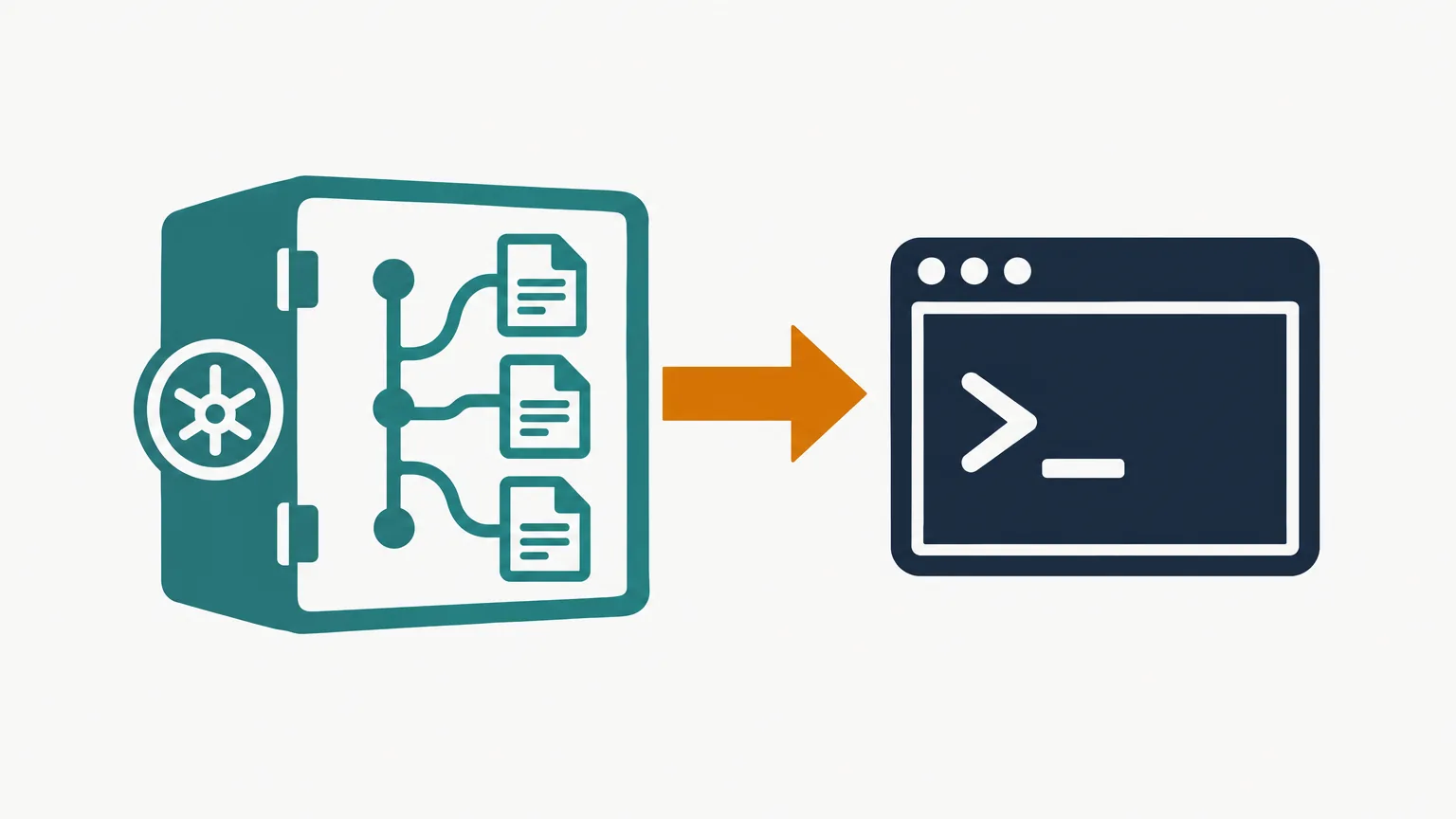
Pierre describes Code Storage as infrastructure for storing and working with code, while Trees helps applications represent repository structure and Diffs helps them show changes. These sound like ordinary developer primitives, but they are central to agentic coding. An agent cannot make a trustworthy change if it cannot identify the right files, compare the before-and-after state, and show a human exactly what it wants to commit.
OpenAI says Pierre’s technology is already used inside Codex. That means the acquisition is less about adding a brand-new feature and more about bringing an important part of the existing workflow under one organization. The likely benefit is tighter coordination between the model, the execution environment, repository navigation, and review surfaces. The risk is that the same coordination can make it harder for users to move their work to another tool if proprietary assumptions accumulate.
Why Code Storage matters beyond Git hosting
Traditional Git hosting is organized around repositories, branches, commits, pull requests, and human-authored workflows. Coding agents add another dimension: temporary workspaces, generated patches, tool calls, checkpoints, partial results, and review requests that may be created several times during one task. A storage layer designed for this process can make agent work easier to resume and inspect.
This does not mean Git disappears. Git remains the durable collaboration and version-history layer for most teams. The change is that an agent may need a richer working set around Git: a tree that can be queried quickly, a diff format that can be rendered consistently, and metadata that explains which task produced a change. Developers should therefore ask whether an AI tool exports normal commits and patches, supports existing repositories, and leaves an audit trail rather than treating the agent session as a black box.
The distinction is useful when comparing software. A coding assistant, terminal, Git client, diff viewer, test runner, or editor can each solve a different part of the workflow. The BTTC software directory is a practical place to find complementary tools instead of assuming one AI product must replace every developer utility.
Codex could become an end-to-end workbench
The announced direction suggests Codex may evolve from an agent that edits files into a workbench that understands a project from intake to review. In that model, a user gives the agent a goal, the agent explores a repository tree, makes changes in an isolated workspace, runs tests, presents a readable diff, and waits for approval before durable publication. Each step is familiar; the integration is what changes the product category.
That integration could improve context and reduce repetitive setup. It could also expose new failure modes. If repository permissions, cloud execution, code storage, model access, and deployment hooks are controlled by one product, a mistake can travel farther. Teams need granular permissions, network restrictions, secret handling, approval gates, logs, and easy rollback. A polished agent interface is not a substitute for those controls.
What changes for developers and teams
In the short term, most users should not rewrite their workflow because of the announcement. The acquisition has not completed, and availability, pricing, migration paths, and product boundaries may change. Developers can instead prepare by keeping repositories portable, using ordinary Git operations, documenting build commands, and testing whether generated changes can be reviewed without the original assistant.
Teams evaluating AI coding products should measure outcomes rather than model excitement. Useful tests include: how often the agent finds the correct files, whether its diff is complete, how well it handles failed tests, whether a reviewer can understand the reasoning, how permissions are scoped, and how easily the team can export work. These checks apply to Codex and to every competing tool.
Open-source users should also watch the boundary between open libraries and hosted services. OpenAI says Pierre’s open-source projects will remain open source, but the surrounding hosted workflow may still develop separately. Read the license, inspect the repository, and distinguish a reusable library from a managed platform before building a long-term dependency.
A practical checklist for choosing an AI coding tool
Start with the repository boundary. Can the tool work with your existing Git remote, local checkout, branch model, and CI pipeline? Next, inspect the evidence boundary. Can you see the exact files changed, commands run, test output, and unresolved uncertainty? Then review the control boundary: who can read secrets, write files, call the network, merge changes, or trigger deployment?
Finally, test the exit path. Export a patch, close the account, switch models, and ask another developer to continue from the resulting repository. A tool that is fast but leaves no portable history may create more cost than it saves. For related research on choosing practical software, readers can browse the BTTC blog and compare tools by workflow rather than by headline model size.
Frequently asked questions
Does OpenAI already own Pierre? The November 4 announcement describes a planned acquisition. It remains subject to customary regulatory approvals, so completion and final product timing should not be assumed.
Will Pierre’s open-source projects disappear? OpenAI says Pierre’s open-source projects will remain open source. That statement does not guarantee that every hosted feature, roadmap, or commercial integration will stay unchanged.
Is this a replacement for GitHub? No replacement has been announced. The strategic significance is that Codex may gain a tighter code-storage and review workflow around existing Git-based development, not that GitHub or Git is immediately removed.
What should an individual developer do now? Keep work portable, review generated diffs, protect secrets, and test whether an AI tool can export normal commits or patches. Do not make a major migration solely from an acquisition headline.
Conclusion
OpenAI’s planned Pierre acquisition is a signal that the next phase of AI coding will compete on repository context, code storage, diffs, review, and workflow control—not only on model benchmarks. If the integration works, Codex could become a more coherent agent-first development environment. Developers should welcome better tooling while preserving portability, human approval, inspectable changes, and clear exit paths.