GitHub Copilot Code Review Resolution Reasons: A Workflow Playbook
GitHub Copilot code review now supports resolution reasons for AI suggestions. Here is how teams can turn that update into better audit trails, cleaner pull requests, and smarter developer tooling choices.
In This Article
This article covers GitHub Copilot Code Review Resolution Reasons: A Workflow Playbook. GitHub Copilot code review now supports resolution reasons for AI suggestions. Here is how teams can turn that update into better audit trails, cleaner pull requests, and smarter d...
Key Takeaways
- Published: August 28, 2026
- Category: AI Tools
- Tags: AI, Developer Tools, GitHub, Code Review, Software Quality
- Views: 421
- Reading time: ~14 min read
"GitHub Copilot code review now supports resolution reasons for AI suggestions. Here is how teams can turn that update into better audit trails, cleaner pull requests, and smarter developer tooling choices."
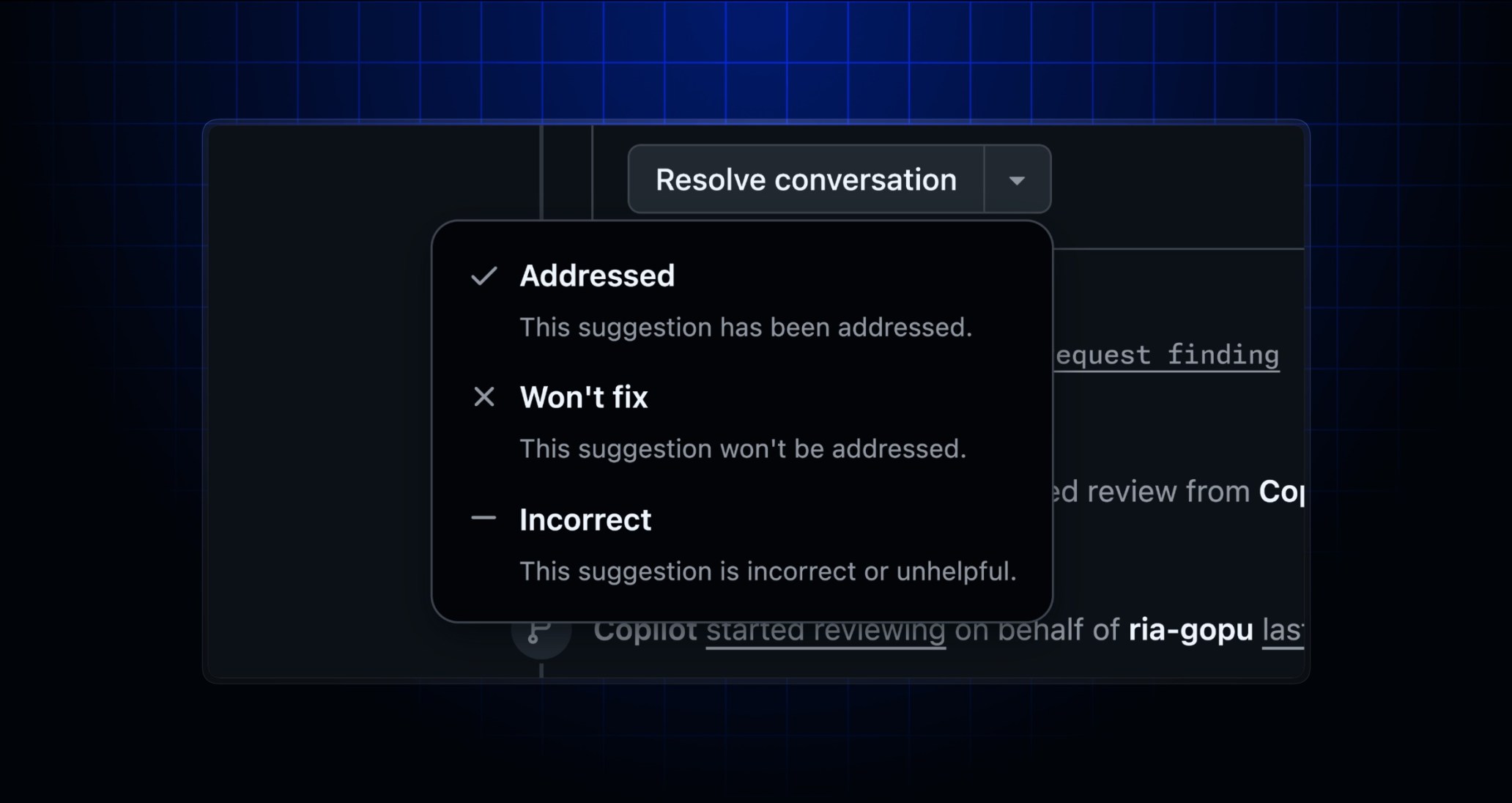
GitHub's latest Copilot code review update adds resolution reasons for suggestions and expands what the reviewer can handle inside pull requests. According to the GitHub Changelog, teams can now mark AI review comments with reasons such as addressed, won't fix, or incorrect, giving maintainers a clearer audit trail when human judgment overrides or accepts a recommendation. That small workflow detail matters because AI code review is moving from novelty to production habit.
For BTTC readers, the update is a reminder that AI coding tools should be evaluated as part of a full software workflow, not as isolated chat boxes. A review assistant may find bugs, explain risky changes, and reduce reviewer fatigue, but the team still needs issue tracking, release notes, testing utilities, documentation tools, and secure app management. If you are comparing developer utilities or looking for practical tools beyond your IDE, the BTTC software directory is a useful place to continue discovery.
TL;DR: AI review needs a decision record
Copilot can speed up code review by pointing out defects, missing tests, confusing logic, and maintainability risks. The new resolution reasons make the human decision visible: a suggestion was fixed, intentionally rejected, or judged wrong. That is important for teams using AI at scale because silent dismissals create ambiguity. A visible decision record helps reviewers learn which suggestions are useful, helps managers measure quality without pretending every AI comment is correct, and gives future maintainers context when they read a pull request months later.
Why resolution reasons are more than a UI detail
Every engineering organization eventually asks the same question about AI review: how do we know whether the tool improved quality or merely produced more comments? Raw comment count is a poor metric. If a model produces ten suggestions and eight are marked incorrect, the team should tune prompts, repository instructions, rules, or rollout scope. If most suggestions are addressed, the assistant may be catching real defects before they reach production. Resolution reasons turn fuzzy reactions into operational data.
This also reduces social friction. Developers are more likely to engage with AI review when they can close a suggestion honestly instead of pretending all feedback has equal value. "Won't fix" can document a product tradeoff. "Incorrect" can protect a teammate from wasting time on a false positive. "Addressed" can show that the AI-assisted review produced a real change. The feature therefore supports both governance and day-to-day developer trust.
A practical workflow for teams adopting AI code review
Start with a limited rollout. Choose repositories where tests are reliable, owners are responsive, and pull requests are small enough for reviewers to inspect carefully. Publish a short team policy that explains when Copilot review should be requested, which findings must receive human verification, and how maintainers should use resolution reasons. Avoid treating AI comments as blockers until the team has measured accuracy in its own codebase.
Next, connect review data to the rest of the development workflow. If Copilot repeatedly asks for missing tests, create a testing checklist. If it flags unclear error handling, add examples to internal documentation. If it misses security-sensitive patterns, update repository guidance and pair AI review with specialized scanners. The best outcome is not simply more automated comments; it is a feedback loop that improves source code, review habits, and developer tools together.
What individual developers should do differently
For solo developers and small teams, the feature is useful because it encourages deliberate review instead of passive acceptance. When Copilot suggests a change, ask three questions: is the issue real, is the suggested fix safe, and should the lesson become a reusable checklist? Save recurring lessons in a note, issue template, or project wiki. Over time, that turns AI feedback into a personal engineering playbook.
Developers should also keep local utilities ready. Diff viewers, markdown editors, PDF readers for specs, screenshot tools, terminal helpers, and release-note generators all make review easier. Browse related tools through BTTC software when you want to improve the process around your code host rather than only changing the code host itself.
Comparison checklist for AI review tools
| Capability | Why it matters | What to verify |
|---|---|---|
| Resolution tracking | Keeps human decisions visible | Can reviewers mark addressed, rejected, or incorrect suggestions? |
| Repository context | Reduces generic advice | Does the tool read instructions, tests, and project conventions? |
| Security boundaries | Protects sensitive code | Are permissions, logging, and data controls documented? |
| Integration depth | Lowers workflow friction | Does it work inside pull requests, issues, and CI? |
| Measurement | Separates value from noise | Can teams review acceptance rates and false positives? |
FAQ
Does Copilot code review replace human reviewers?
No. AI review is best used as a second set of eyes that can highlight potential defects and consistency issues. Human reviewers still own architecture, product tradeoffs, security judgment, and final approval.
Why do resolution reasons matter?
They create a record of what happened to an AI suggestion. That record helps teams understand whether the tool is finding real issues, generating noise, or needing better repository guidance.
How can this drive better developer tooling choices?
The feature shows that AI tools are becoming workflow systems. Teams should evaluate not only model quality but also auditability, integrations, security controls, and the surrounding utilities that help developers act on feedback.
Conclusion
GitHub's Copilot code review update is not just about prettier pull request comments. Resolution reasons make AI review measurable, debatable, and easier to trust. Teams that pair the feature with clear policies, testing habits, and practical developer software will get more value than teams that simply turn on another stream of automated suggestions.

