Google AI Mode Travel Planning: The App and Safety Checklist Before You Book
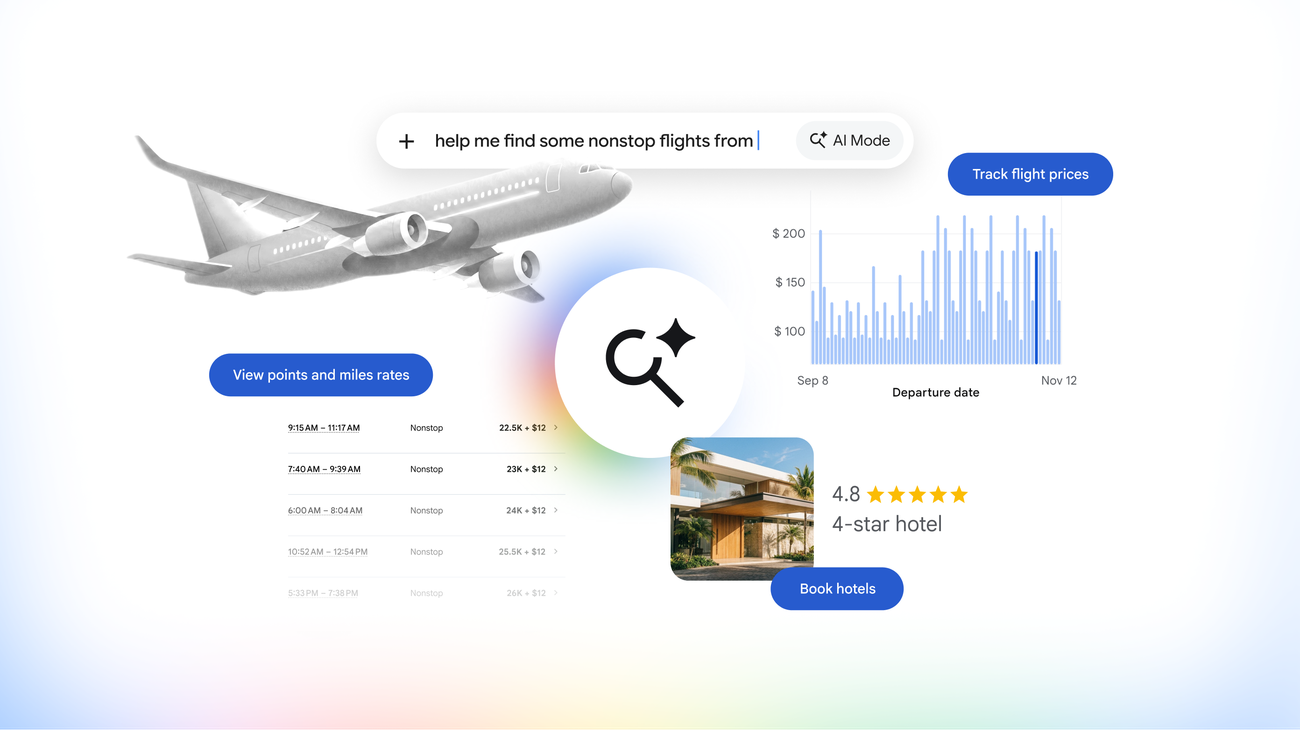
Google Search AI Mode now helps with hotel booking, airfare tracking, and rewards context. Here is how to use AI travel planning while keeping control of sources, documents, privacy, and travel software.
In This Article
This article covers Google AI Mode Travel Planning: The App and Safety Checklist Before You Book. Google Search AI Mode now helps with hotel booking, airfare tracking, and rewards context. Here is how to use AI travel planning while keeping control of sources, documents, privac...
Key Takeaways
- Published: August 28, 2026
- Category: AI Tools
- Tags: AI, Travel Tech, Google Search, Productivity, Software Discovery
- Views: 341
- Reading time: ~13 min read
"Google Search AI Mode now helps with hotel booking, airfare tracking, and rewards context. Here is how to use AI travel planning while keeping control of sources, documents, privacy, and travel software."
Source: https://blog.google/products-and-platforms/products/search/book-travel-ai-mode/
Google has added new travel-planning abilities to AI Mode in Search, including hotel booking help, airfare tracking, and ways to view miles or rewards information while planning a trip. The announcement is not just another travel feature drop. It shows how search is becoming an action layer: people will ask a broad question, compare options, narrow dates, and jump into booking without opening ten separate tabs first.
For BTTC readers, the practical question is not whether AI should plan every vacation. The question is how to use AI search without losing control of documents, budgets, offline access, or app choices. A trip still depends on boarding passes, PDFs, maps, translation, receipts, calendars, secure notes, and media tools. That makes AI travel planning a useful doorway into a broader software workflow. If you want utilities that help after the search step, start with the BTTC software directory and build a small travel toolkit before you leave.
TL;DR: AI can shortlist the trip, but software still runs it
AI Mode can speed up discovery by turning a vague travel intent into candidate hotels, flight-price alerts, and loyalty-context prompts. That is valuable when you are comparing unfamiliar destinations or juggling dates. But the final workflow still needs human checks: verify cancellation rules, confirm fees on the merchant site, save key documents, and keep offline backups. Treat AI as a planning assistant, not as the only record of your trip.
Why this travel update is worth watching
Travel is one of the clearest tests for generative search because it mixes freshness, local knowledge, prices, availability, personal preferences, and transactions. A good answer must know whether a hotel is near public transport, whether a flight price is unusually high, whether a loyalty program changes the real cost, and whether a traveler wants quiet, nightlife, family space, or workspace.
That complexity makes the update click-worthy for ordinary users and strategically important for software makers. If Google can keep more of the planning journey inside Search, travel brands, booking sites, review publishers, and app developers will need clearer content, cleaner structured data, and more useful post-click experiences. The same lesson applies to any website competing for AI-search citations: publish specific, verifiable, extractable information rather than generic marketing copy.
A safer AI travel-planning workflow
Start with exploration. Ask AI search for neighborhoods, seasonal tradeoffs, airport transfer options, and itinerary constraints. Then open the cited sources, hotel pages, airline pages, and official tourism information before you rely on any recommendation. Prices and policies change quickly, so the source link matters as much as the generated summary.
Next, separate discovery from commitment. Use AI to create a shortlist, but book only after checking the final merchant page for resort fees, baggage rules, visa requirements, refund windows, and accessibility details. Screenshot or save the confirmation page because a conversational answer may not be easy to recover later.
Finally, prepare a backup kit. Download boarding passes and hotel confirmations as PDFs. Keep a calendar copy of flight and check-in times. Store emergency contacts, insurance details, and passport copies in a secure place. Install translation, maps, notes, and file-viewer apps before the trip rather than searching under airport Wi-Fi pressure.
What app and software builders should learn
The Google travel update is also a signal for product teams. Users increasingly expect software to accept messy goals, keep context, and hand them to the right next action. That expectation will reach finance apps, document utilities, developer tools, media editors, and shopping assistants.
If you build software, add structured help pages that answer concrete questions: supported formats, privacy boundaries, offline behavior, export options, pricing limits, and step-by-step workflows. Those details are useful for people and easier for AI systems to cite. If you publish guides on the BTTC blog, connect each guide to real tools, because search visitors often convert only after they see the next practical step.
Quick checklist before you trust an AI itinerary
| Check | Why it matters | Better habit |
|---|---|---|
| Source links | AI summaries can miss date-sensitive details | Open airline, hotel, and official pages |
| Final price | Taxes, bags, deposits, and fees change totals | Compare the checkout page, not only the answer |
| Documents | Chat history is not a travel archive | Save PDFs and offline copies |
| Privacy | Trips reveal location, identity, and payment context | Avoid sharing unnecessary personal data |
| Offline access | Roaming and airport Wi-Fi can fail | Prepare maps, tickets, notes, and file tools |
FAQ
Should I book travel directly from an AI answer?
Use the AI answer to narrow options, but complete the booking only after checking the hotel, airline, or trusted booking page. The final page should control the price, policy, and confirmation record.
What software should I prepare before a trip?
Useful categories include PDF readers, secure notes, translation apps, offline maps, calendar tools, receipt scanners, and media backup utilities. Browse BTTC software for practical options that fit your device.
Why does this matter for SEO and content teams?
AI travel search rewards content that is specific, current, and easy to verify. Pages with clear facts, FAQs, tables, and trustworthy links are easier for both users and AI systems to use.
Conclusion
Google's AI Mode travel features show where search is heading: fewer isolated queries and more guided workflows. Use that speed for discovery, then rely on trusted sources, saved documents, and dependable software for the parts of travel where mistakes are expensive.

