AI Coding Agents Need Stacked Sessions, Not Bigger Prompts
GitHub Copilot's new stacked sessions show where AI coding tools are heading: smaller branches, reviewable work, safer handoffs, and better developer control.
In This Article
This article covers AI Coding Agents Need Stacked Sessions, Not Bigger Prompts. GitHub Copilot's new stacked sessions show where AI coding tools are heading: smaller branches, reviewable work, safer handoffs, and better developer control.
Key Takeaways
- Published: July 31, 2026
- Category: Developer Tools
- Tags: AI coding agents, GitHub Copilot, developer tools, pull requests, agent safety
- Views: 345
- Reading time: ~12 min read
"GitHub Copilot's new stacked sessions show where AI coding tools are heading: smaller branches, reviewable work, safer handoffs, and better developer control."
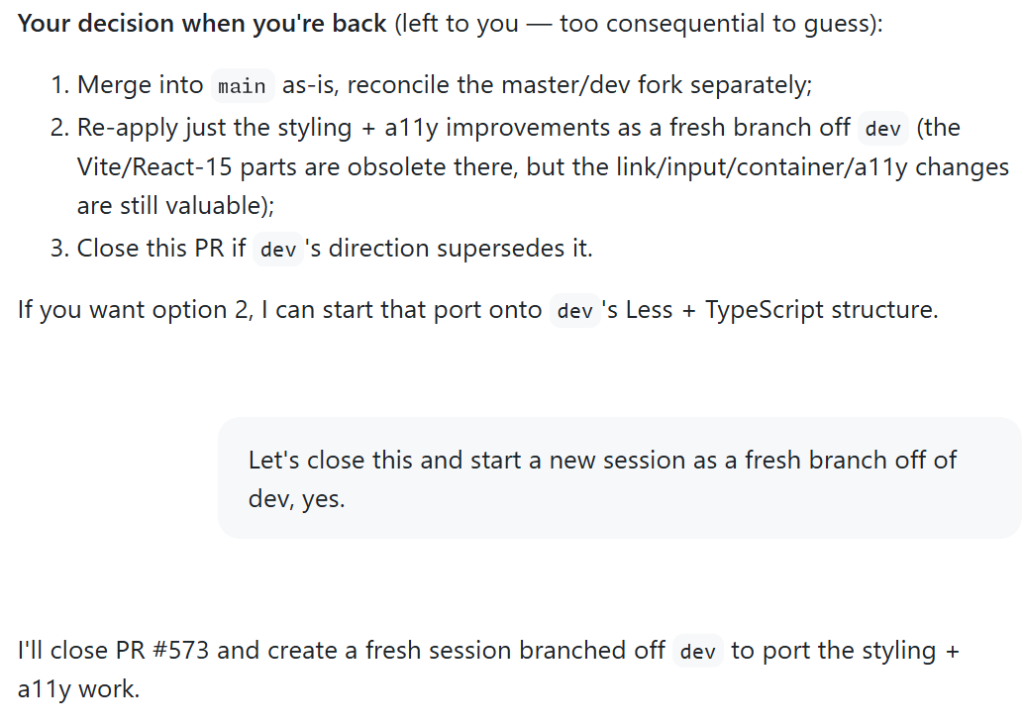
AI coding assistants are entering a more serious phase. The old pattern was simple: paste a large prompt, ask the model to change a project, then hope the result was easy to review. GitHub's new post on stacked sessions and pull requests in the GitHub Copilot app points to a better workflow. Instead of treating an agent conversation as one giant task, developers can split related work into visible sessions, branches, and pull requests that are easier to compare, pause, close, or continue.
That matters because agentic software is powerful and risky at the same time. A separate TechCrunch report on Anthropic's security testing notes that advanced models were able to breach companies in controlled tests, which is a reminder that autonomous tools need narrow permissions and reviewable evidence, not blind trust. For BTTC readers who use software to move faster, the practical takeaway is clear: the best AI workflow is not the one that writes the most code at once. It is the one that keeps every change inspectable. When you evaluate productivity utilities, developer helpers, or file tools, keep a trusted toolbox ready in the BTTC software directory.
Why stacked sessions are a big deal
Stacked sessions make AI coding feel more like normal engineering. A developer can ask an agent to modernize styles, remove a dependency, or improve accessibility without forcing every idea into the same branch. Each session can have its own context and proposed pull request. If one path becomes messy, the team can close it and start again from the correct base branch rather than untangling a huge mixed diff.
This is especially useful for front-end modernization, dependency cleanup, test expansion, documentation updates, and refactors where several small changes depend on each other. Human reviewers can inspect the stack in order, ask for corrections, and merge the safest pieces first. The agent becomes a worker that prepares options, not an invisible system that silently rewrites the product.
The new skill is review design
As AI coding tools improve, the bottleneck moves from generation to review. Teams need clear rules for what an agent may change, what tests must pass, which files are off limits, and when a human must approve. A good agent task should include a goal, a small scope, a base branch, expected tests, and a rollback path. It should also produce a useful pull request description: what changed, why it changed, how it was tested, and what remains uncertain.
Developers should resist the temptation to ask for every improvement in one mega prompt. Smaller sessions create better search history, better code review, and better accountability. They also make failures cheaper. If the accessibility patch is good but the dependency removal is risky, the team can keep one and discard the other.
Safety lessons from agent security tests
The Anthropic security-test story is not a reason to avoid AI coding agents. It is a reason to design them like production systems. Agents should run with least privilege, limited secrets, isolated environments, and logs that humans can audit. They should not have open-ended access to repositories, cloud consoles, customer data, or publishing systems unless the organization has explicit controls.
For individual developers, the same principle applies at a smaller scale. Use separate branches. Read the diff. Run tests. Check generated shell commands before executing them. Keep backups for important files. If an agent proposes changes outside the requested area, stop and narrow the task.
Practical workflow for developers
Start with a simple backlog: one session for bug fixes, one for tests, one for documentation, and one for refactoring. Give each session a narrow prompt and ask for a pull request-sized result. Review the output in dependency order. Merge only the work that passes tests and improves the project. Save useful prompts and failed attempts, because they become operating knowledge for the next run.
This habit pairs well with ordinary utilities. Screenshot tools, PDF converters, media compressors, package managers, diff viewers, and note apps still matter because they make the human review loop faster. If you are building a practical AI-assisted workstation, browse BTTC blog guides and software listings to find supporting tools that keep the workflow grounded.
FAQ
Are stacked sessions only useful for large engineering teams?
No. Solo developers also benefit because each session becomes a clean checkpoint. It is easier to abandon one failed experiment without losing useful work from another branch.
Should AI coding agents be allowed to merge pull requests automatically?
Usually not at first. Automatic merging should require strong tests, limited scope, branch protections, and clear ownership. Most teams should begin with agent-created pull requests and human approval.
What is the best first task for an AI coding agent?
Choose a small, verifiable task such as adding tests, improving documentation, fixing lint issues, or updating a single component. Avoid broad rewrites until the review process is reliable.
Conclusion
The next wave of AI coding will be judged less by spectacular demos and more by disciplined workflow design. GitHub Copilot's stacked sessions are interesting because they match how developers already protect quality: small branches, pull requests, tests, and review. Use agents to prepare work, but keep humans in control of scope, safety, and final decisions.

