AI Agents Are Becoming a Software Layer, Not Just a Chat Feature
OpenAI’s September 2026 Agents API launch signals a shift from chat features to long-running software workflows. Here is what it means for developers, users, and safer tool discovery.
In This Article
This article covers AI Agents Are Becoming a Software Layer, Not Just a Chat Feature. OpenAI’s September 2026 Agents API launch signals a shift from chat features to long-running software workflows. Here is what it means for developers, users, and safer tool discove...
Key Takeaways
- Published: September 22, 2026
- Category: Artificial Intelligence
- Tags: AI agents, developer tools, software trends, AI security
- Views: 343
- Reading time: ~14 min read
"OpenAI’s September 2026 Agents API launch signals a shift from chat features to long-running software workflows. Here is what it means for developers, users, and safer tool discovery."
TL;DR: Agents are becoming infrastructure
OpenAI's September 10, 2026 launch of the Agents API is a useful signal for the whole software market: long-running AI agents are moving from isolated chat features into a managed application layer. The important change is not only a smarter model. It is the combination of a durable harness, tool access, subagents, a selectable compute environment, and enough observability to keep work running after the first prompt. For developers and software users, this means the next wave of productivity tools will be judged by how reliably they finish a workflow, not by how impressive one answer sounds.
Why the Agents API launch matters
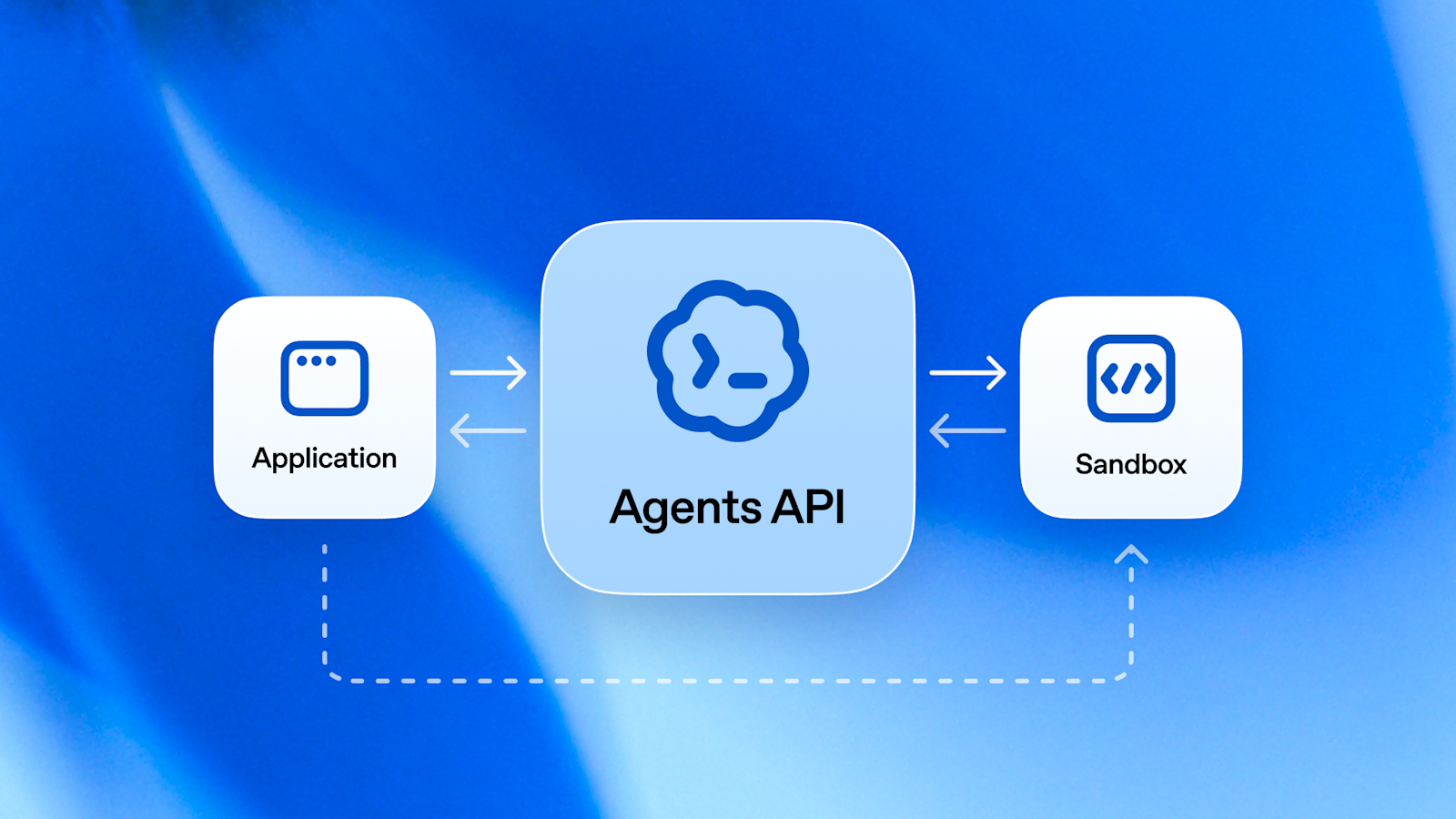
The Agents API announcement describes a public beta built on the same open-source Codex harness that OpenAI uses to coordinate context, tools, and long-running execution. A developer can define a task, model, tools, and environment in one API call. The service can then preserve state, use files, delegate to subagents, and continue operating in a managed sandbox or a supported external environment.
That is a meaningful change in the unit of software design. A traditional AI feature usually looks like a request and a response. An agentic feature looks more like a worker: it receives an objective, gathers evidence, calls tools, makes intermediate decisions, records artifacts, and reports a result. The model still matters, but the harness around the model becomes part of the product's core value.
This direction is not limited to one vendor. Google Cloud's recent account of agentic vulnerability scanning and remediation shows why infrastructure teams are interested. Their approach continuously scans code changes, prioritizes likely weaknesses, and helps patch problems before they reach production. The practical theme is the same: agents need permission boundaries, repeatable tools, evidence, and a place to save work.
What a production-ready agent actually needs
The phrase “AI agent” can hide a lot of engineering. A dependable system needs at least five layers.
- A clear objective. The task must define what completion means, what the agent may change, and when it should stop.
- A controlled environment. Files, packages, secrets, network access, and compute should be selected for the workload rather than left open by default.
- Tool contracts. Search, code execution, databases, and APIs need typed inputs, useful errors, and explicit approval for risky actions.
- State and recovery. Long tasks can fail halfway through. Durable sessions and checkpoints let an agent resume instead of starting from zero.
- Traceability. Operators need to inspect tool calls, subagent handoffs, files changed, and the evidence behind a conclusion.
This checklist explains why simply adding a chat box to an existing product is not enough. The user experience may be conversational, but the underlying system resembles a workflow engine with an LLM in the loop.
Where the opportunity is for everyday software
The clearest early wins are tasks with a known starting point, repeatable tools, and a verifiable output. Examples include turning a folder of documents into a structured report, reviewing a pull request against a policy, comparing product specifications, monitoring a service, or preparing a first draft from several sources.
For users browsing a software catalog, this creates a new discovery question: does a tool merely generate text, or can it complete a useful job? A note-taking app that summarizes a page is helpful. A research workspace that searches, extracts evidence, organizes citations, and exports a brief is closer to an agentic product. Browse BTTC software recommendations when you want to compare tools by the job they help you finish, not just by their feature list.
The best products will also expose the boundary between automation and approval. A user should know when an agent is reading, editing, sending, purchasing, or publishing. Clear checkpoints make agents more useful because they reduce the fear of hidden side effects.
Security is part of the feature, not a footnote
More autonomy increases the cost of mistakes. An agent that can run code, access internal files, or call external services can also leak data, make an irreversible change, or be manipulated by hostile instructions inside a document. Google Cloud's security work is a reminder that agentic automation must be designed as part of the software development lifecycle, not bolted on after launch.
A practical evaluation should ask: Which credentials can the agent see? Can it operate without network access? Are destructive tools separated from read-only tools? Is every action logged? Can a human stop or resume the run? Are outputs checked by a second rule or tool before publication? These questions are more predictive than a benchmark score when an agent is handling real work.
How to evaluate the next agentic tool
Start with a small workflow and measure completion, not novelty. Record how often the tool finishes without intervention, how many tool calls it needs, how clearly it explains failures, and whether a human can audit the result. Test an ordinary case, an ambiguous case, a malicious instruction, and a partial outage.
Also check portability. OpenAI's Agents API separates the harness from the compute environment and lists integrations with several infrastructure providers. That model can reduce lock-in, but only if your prompts, tools, files, and evaluation data remain portable. Before adopting a platform, export a representative run and confirm that you can understand the state and reproduce the important steps.
Conclusion
The Agents API launch is best understood as a platform signal: AI is becoming a software layer that can carry work across tools and time. The winners will not be the products that promise the most autonomy. They will be the ones that combine useful execution with clear permissions, recoverable state, observable decisions, and a human-friendly approval boundary. For readers looking for practical tools, the shift makes software discovery more task-oriented: find the application that reliably completes the next job on your list.